
Let's Talk About:
The Phone Free Concert
November 11th 2026
Someone involved in the concert scene of any kind can note the rise of the phone-free concert.
Phoebe Bridgers for example announced her 2026 Lost Tour will be completely phone free, and Harry Styles previously had a phoneless concert at MSG earlier this year.
First and foremost, we must understand how these shows work. For Bridgers and The Lost Tour, venues utilize Yondr pouches, lockable pouches for cell phones (and other electronic devices) that make the devices inaccessible yet able to stay with the owner.
Through the process of entering the arena, fans are directed to tables with employees where they power-off their phones and give it to an employee who locks it into the pouch. Fans are then returned the locked pouch and given a crossbody strap to attach to it.
Phones aren't the only locked item, though they are the device most people have. All cameras, AirPods, smartwatches, and Meta glasses are either prohibited from being brought into the venue or locked into the pouches as well.
In today's digital age, it seems at almost every concert there is a guarantee of a large group of people with their phones out videotaping or photographing the show. Oftentimes, you will see the entirety of a show via social media before you go in person. This creates a large pressure for the artist, as every moment is documented thousands of times over via multiple devices at several angles. Small mistakes, messed up lyrics, or technical difficulties aren’t just a simple story to be passed on and forgotten, but rather to live on the vast cloud of the internet for the rest of time, able to be seen by anyone, at any time and anywhere they please.
Phones themselves are also distracting. Rather than being fully present, concert-goers can be focused on getting the perfect picture or video, documenting every moment, or simply distracted by different notifications or messages. It’s distracting to those not using the device as well. Ask yourself, how often have you looked at the show via someone recording the stage, rather than simply at the stage and artist themselves? How often have you been conscious of the people around you taking photos of themselves and are avoiding being in the shot?
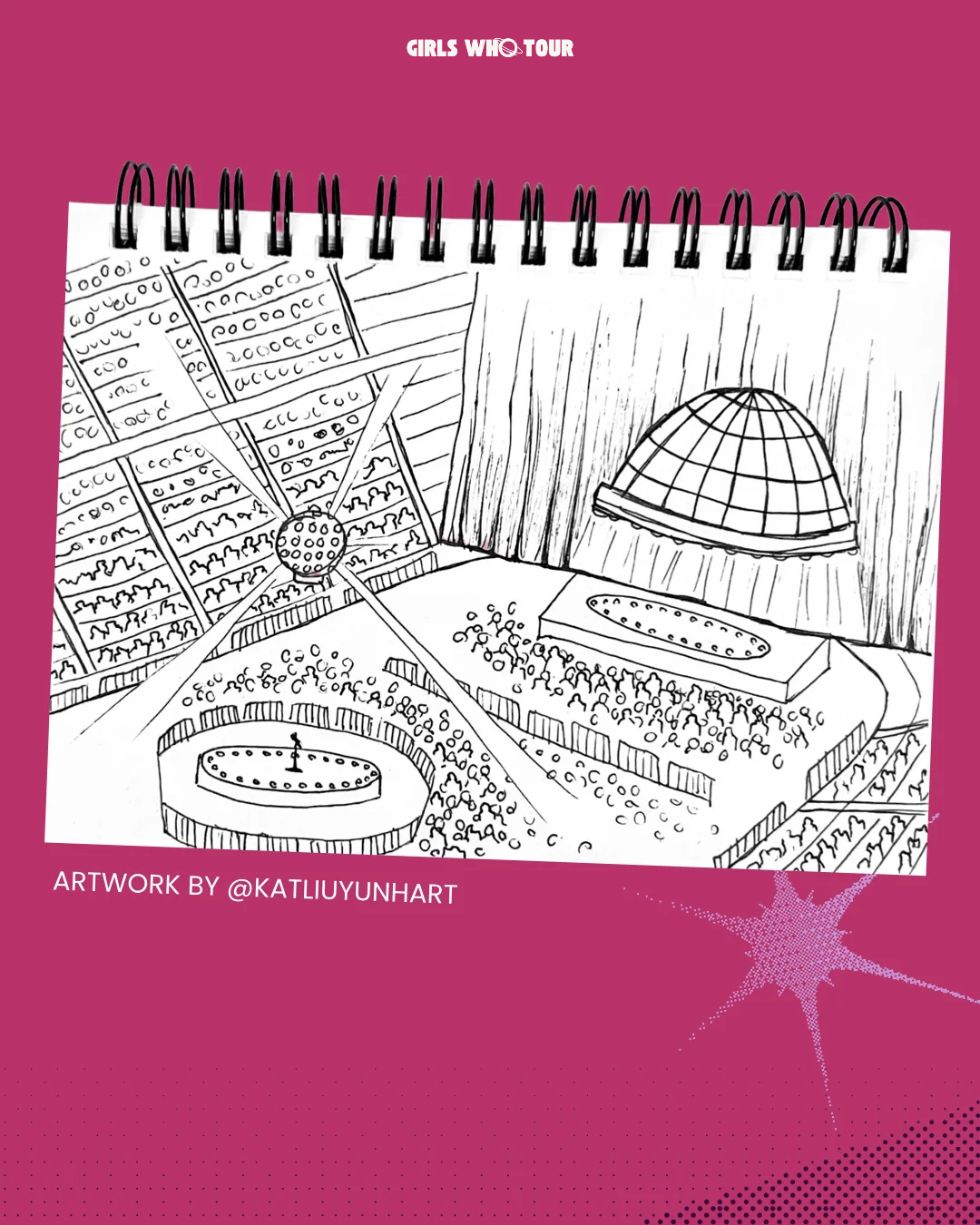
Another benefit to the phone ban: It’s forcing people to get creative. Besides simply verbally relaying what happened during a performance, concert goers have been documenting the show via handwritten notes or sketches, turning into full blown pieces of art to be shared on social media. From first hand sketches from inside the arena, animations, to scrapbooks there has been no shortage of art created to help materialize the experience.
Fan projects have had to become creative as well. With the lack of the phone flashlight, fans have decorated and brought in lighters to hold up during songs, or glow sticks depending on what the venue allows.
However, with every positive to the rule, some negatives arise as well. Fans have raised concerns on accessibility, considering many individuals use phones regularly for health related reasons, and others have claimed that the rule is “classist” for those who cannot afford to see the show in person but might have viewed pieces of it online.
Ultimately, each artist must decide what’s best for them and their fan base. Lizzie McAlpine for example had a phone free show ahead of her fourth studio album “Angle”’s release. "It's kind of freeing in a way. It was very much like I could just be myself." McAlpine said in an interview with Rolling Stone. However, she noted that for her Over Country Tour she’s allowing them, sharing that part of the fan experience is capturing those memories and looking back on them later on. “I think that's also a big part and a special part of touring, of going to see a show, for a fan. So I want them to have that experience as well.” McAlpine said.
Though the positive and creative outcomes that have flourished from it cannot be denied, with whether or not the trend will continue, only time will tell. From huge stadium shows to smaller show spaces, we’ll just have to wait and see.